Budapest to Vienna - 15 Best Ways to Travel in 2026
Feb. 11, 2026 by Kamilla
Budapest and Vienna – two capitals on the Danube, offer an elegant contrast. From Budapest's relaxed grandeur and thermal spas to Vienna's order, history, and refinement. Thankfully, traveling from Budapest to Vienna is one of the most classic and well-connected routes in the region.
High-speed trains run frequently throughout the day, but for travelers eager to add something memorable to their transit day, a sightseeing transfer tour includes stops in picturesque towns and at the impressive Esztergom Basilica, turning simple travel into a mini-adventure.
This guide explains how to travel from Budapest to Vienna, with current travel options, timing breakdowns, and ticket recommendations.
1. Budapest to Vienna by Train
Ease
Fun
Sightseeing
| Average Duration | 2 hours 40 minutes |
| Frequency | Frequent departures |
| Price | Starting from €13 |
The train is the fastest and most convenient way to travel from Budapest to Vienna, with departures every hour from 5:40 AM to 8:40 PM and a journey time of around two hours and forty minutes. Every other service is operated by a RailJet high-speed train, which includes a restaurant car, free Wi-Fi, and a quiet zone. The remaining connections run as comfortable EuroCity trains. Both are a solid choice for the journey.
Train Stations in Budapest and Vienna
In Budapest, all trains depart from Budapest Keleti station on the Pest side of the city, connected to the city center via Metro Line 2 (red) and Metro Line 4 (green). Trains also stop at Budapest Kelenföld station on the Buda side, connected via Metro Line 4 (green).
In Vienna, trains arrive at Vienna Central Station (Wien Hauptbahnhof), connected to the city center via Metro Line U1 (red) at the Südtiroler Platz-Hauptbahnhof stop.
Tickets and Booking
This is one of the most affordable short routes in Central Europe. Train tickets start at €13 when bought in advance, with the regular walk-up price sitting around €50. Trainline is the easiest place to book for international travelers. It searches both Hungarian and Austrian Railways simultaneously, shows fares in your preferred currency, and handles international cards without any complications. Rail Europe works well too, particularly if you are linking this leg with other European train journeys and want to keep everything in one account.
Hungarian Railways (MÁV) and Austrian Railways (ÖBB) both sell tickets directly, and prices can occasionally differ between the two for the same connection, so a quick check on each is worthwhile. Both sites quote fares in euros or Hungarian forints, which can be disorienting if you are not used to converting on the fly. Trainline keeps things simple. Trains run every hour throughout the day, so you are rarely stuck for options, but the cheapest advance fares disappear quickly during summer and over bank holiday weekends. Book a few days ahead to avoid paying the full price.
Insider Tip
The route between the two capitals is not especially scenic for most of the journey, but the best views come in the stretch near the Hungarian-Slovak border. Sit on the right side of the train facing the direction of travel for glimpses of the Danube and the rolling countryside as the train crosses into Slovakia briefly before continuing into Austria.
Book your Budapest to Vienna train on Trainline | Book through Rail Europe
2. Budapest to Vienna Transfer Tour
Ease
Fun
Sightseeing
| Average Duration | 9-10 hours |
| Frequency | Private tours daily, group tours 4 weekly |
| Price | €99 |
The journey from Budapest to Vienna takes under three hours by train or bus. It is fast, frequent, and gets you there with minimal effort. What it doesn't do is show you anything along the way. You leave Budapest, arrive in Vienna, and the landscapes, towns, and history of Hungary and Slovakia quietly pass by without becoming part of your trip.
The Budapest to Vienna Transfer Tour takes a different approach. You start the day in Budapest and end it in Vienna, with three stops across two countries in between. You leave in the morning and arrive in Vienna as the afternoon winds down.
What's Included
The open group tour departs Budapest at 9:00 AM and runs for approximately 9 to 10 hours, arriving in Vienna in the early evening. You travel in a comfortable, air-conditioned minivan with a maximum of eight passengers. The small group size keeps things relaxed and gives your guide space to give everyone real attention at each stop.
Your guide is a local with genuine knowledge of Hungary and Slovakia. You get real context about the history and culture of the places you visit, not a rehearsed script, and someone to ask questions throughout the day.
A lunch break is scheduled in Esztergom, where you can try local Hungarian food at one of the restaurants in the city center. Lunch is not included in the tour price.
Hotel pickup and dropoff are available for private bookings. Open group tours depart from a central meeting point in Budapest and include dropoff in central Vienna.
The price is €99 per person for the open group tour. Private bookings are available for couples, families, and groups who want a more exclusive and flexible experience. Check the Budapest to Vienna Transfer Tour booking page to see the exact price for your group.
The Stops Along the Way
Stop 1: Szentendre
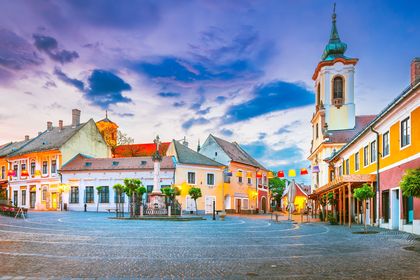
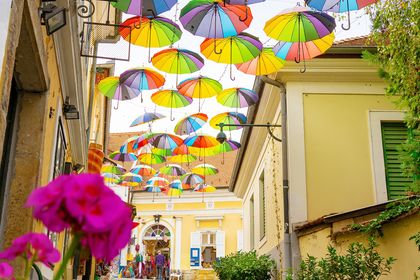
Szentendre is a charming riverside town just outside Budapest. It was shaped by Serbian settlers who arrived in the 17th century, leaving their mark in Orthodox churches, cobblestone lanes, and a distinctly Mediterranean atmosphere. Its colorful Baroque facades and artistic community have made it one of Hungary's most loved destinations.
You'll stroll through the picturesque Old Town, taking in the vibrant atmosphere and the unique blend of Hungarian and Serbian heritage around every corner. There's a real café culture here too, and plenty of spots to stop, sit down, and soak in the atmosphere before moving on.
Stop 2: Esztergom Basilica

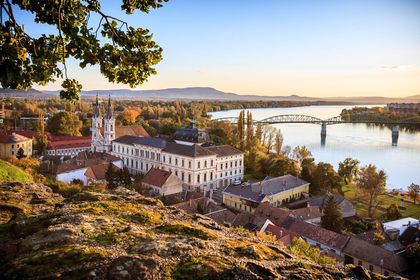
Esztergom was the most important city in medieval Hungary, the royal seat and birthplace of the country's first Christian king, Stephen I. Mongol and Ottoman invasions devastated it over the centuries, yet what stands on its hilltop today is one of the largest and most commanding churches in Europe.
You approach the Esztergom Basilica from the banks of the Danube and take in its enormous Classical dome rising above the skyline on both sides of the river. The scale of it from the water is genuinely striking, and it makes for one of the most memorable views on the entire trip.
Stop 3: Bratislava
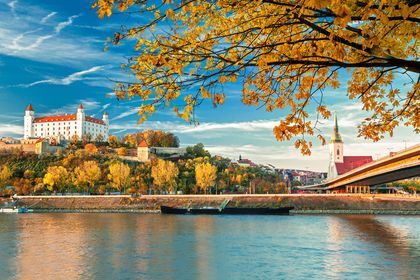
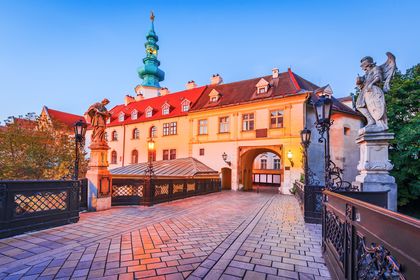
Bratislava tends to get overlooked next to its more famous neighbours like Vienna, Budapest, and Prague. But that's precisely what makes it so enjoyable. As the capital of Slovakia, it sits right on the Danube River and packs a surprising amount of charm into a very walkable city center.
You'll explore the compact medieval Old Town on foot, weaving through charming lanes and taking in views of the hilltop castle that towers over the whole city. You'll also have time for a relaxed lunch break here, a great opportunity to try some hearty Slovak dishes before continuing the journey.
Who Is This Tour Best For?
The Budapest to Vienna Transfer Tour is a strong choice for anyone making this journey with more than just the destination in mind.
It works particularly well for solo travelers and small groups who want the camaraderie of a shared experience, as well as couples and families who prefer the more personal format of a private booking. You depart at 9:00 AM and arrive in Vienna in the early evening, leaving you time to settle in before dinner.
What Travelers are Saying
Great drive
Surprise ride
Surprised that the transfer were per vehicle and not by boat, as I presumed. Other than that, Klara was a great guide who took us for a swim in the Danube at a local spot. Wonderful to see Esztergom, amazing sight.
Budapest to Bratislava
An excellent way to see the countryside and stops along the way from one major city to the next. Akos was very knowledgeable and took great care of us!
3. Budapest to Vienna by Bus
Ease
Fun
Sightseeing
| Average Duration | 3 hours |
| Frequency | Frequent departures |
| Price | Starting from €9 |
The bus is the cheapest way to travel from Budapest to Vienna, with departures at least once an hour throughout the day and journey times of under three hours. Flixbus is the main operator on this route, running frequent connections that make it easy to find a departure that fits your schedule. Fares start at €9 when booked in advance, making this significantly cheaper than the train at short notice.
Bus Stations in Budapest and Vienna
In Budapest, most buses depart from Népliget Bus Station, located in Pest and connected to the city center via Metro Line 3 (blue) at the Népliget stop. Some services also stop at Budapest Kelenföld station on the Buda side, connected via Metro Line 4 (green).
In Vienna, most Flixbus services arrive at Erdbergstrasse Bus Station, connected to the city center via Metro Line U3 (orange) at the Erdberg stop. Some services terminate closer to Vienna Central Station. Flixbus also runs direct connections from Budapest to Vienna Airport, useful if you are flying onward from Vienna.
Tickets and Booking
Second class tickets start at €9 when booked in advance and can rise to €29 closer to the departure date. Book directly through the Flixbus website. It is in English and accepts major international payment cards. Seats fill up quickly in summer and on weekends, so try to book a few days before you travel.
Luggage
Flixbus allows one carry-on bag and one large piece of luggage stored in the hold at no extra charge. Check their website for exact size and weight limits before you travel.
Book your Budapest to Vienna bus on Flixbus
Want to see more than just Budapest and Vienna?
The train covers the distance in under three hours, but it passes through the Danube Bend north of Budapest, one of the most rewarding stretches of river scenery in Central Europe, without stopping once. The Budapest to Vienna Sightseeing Transfer Tour takes you through the charming riverside town of Szentendre, with its cobblestone streets and colorful Baroque architecture shaped by centuries of Serbian influence, up to the grand Esztergom Basilica perched above the Danube for a lunch stop in Hungary's ancient royal capital, and on through the medieval Old Town of Bratislava before dropping you in Vienna. It departs at 9:00 AM, arrives around 7:00 PM, and costs €99 per person. Three countries, three stops, and a journey that actually shows you what lies between the two capitals.
4. Budapest to Vienna by Plane
Ease
Fun
Sightseeing
| Average Duration | 4-5 hours (with getting to and from the airport) |
| Frequency | Frequent departures |
| Price | Starting from €95 |
Even if it’s relatively close from Budapest to Vienna, only 215 km in the direct line, you can still fly between the two capitals. Austrian Airlines, the only company operating this route, offers three Budapest to Vienna flights daily, in the morning, around noon, and in the afternoon.
The Budapest to Vienna flight time is only 45 minutes, but if you count getting to/from the airport, security control, and all the waiting, you can expect to spend around 4-5 hours on the journey from central Budapest to central Vienna.
Budapest to Vienna flight price
If you buy the ticket in advance, you can pay €95 for a one-way flight, but last-minute flights can cost around €300. You can purchase the ticket online at the website of Austrian Airlines.
Airports in Budapest and Vienna
The easiest way to reach Budapest airport is by express bus no 100E. It departs every few minutes from the center of the city, next to the metro station Deák Ferenc tér and stops at metro stations Astoria and Kálvin tér. You can buy a ticket onboard; the price is 2.200 HUF. The journey from the center of Budapest to the airport should take around 40 minutes, depending on the traffic.
In Vienna, you can use the City Airport Train (the ticket costs €14,90) or the slower suburban train S7 (for €4,10) - both will take you to the Wien Mitte station near the center of the city, also served by U3 orange metro line and U4 green metro line.
5. Budapest to Vienna by Car
Ease
Fun
Sightseeing
| Average Duration | At least 3 hours |
| Frequency | Every day |
| Price | €700 for rental car + petrol |
If you want full control of your itinerary, you can go for a Budapest to Vienna road trip. The shortest route between the capitals, on the highways, is around 250 km, so that you can get from one city to another in under three hours.
But you can also take it slower, drive on more scenic routes, and stop in some interesting places along the way, such as Györ, known for its Baroque architecture, charming Sopron, or the picturesque 12-th century Liechtenstein castle. You can even do a little detour and add another country - Slovakia - to your agenda. Driving from Budapest to Vienna would give you full flexibility and allow spontaneity during your trip.
The downside of this option is the price - a one-way trip by rental car is usually much more expensive due to returning the vehicle to another location. For Budapest to Vienna rental car road trip you can expect to pay around €700, without the petrol cost.
6. Budapest to Vienna by Private Transfer
Ease
Fun
Sightseeing
| Average Duration | 3 hours |
| Frequency | Every day |
| Price | €250 for a car with a driver |
A cheaper option that would still allow you to travel from Budapest to Vienna hassle-free and see some interesting places along the way is the private transfer. You wouldn’t need to worry about driving yourself. Instead, you can enjoy a hassle-free door-to-door transfer in a comfortable vehicle with an English-speaking driver.
The regular price for Budapest to Vienna private transfer is around €250 per car but for a fee, you can add some interesting sightseeing stops along the way. The most popular places you can visit between Budapest and Vienna are the Danube Bend (especially Esztergom, with the largest church in Hungary), the UNESCO-listed Benedictine Pannonhalma Archabbey, Győr, Sopron, or Bratislava - the capital in Slovakia.
You can also choose the private option of the Budapest to Vienna sightseeing transfer that we discussed in detail above. The door-to-door trip between the capitals will take you around nine hours. You will stop at four beautiful and exciting places along the way: Tata Castle, the Baroque Old Town of Győr, Eszterházy Palace, and Sopron. The Budapest to Vienna sightseeing transfer is a perfect way to travel worry-free and to see more than just the well-known capitals during your trip.
7. Budapest to Vienna by Bike
Ease
Fun
Sightseeing
| Average Duration | At least 7 days |
| Frequency | Every day |
| Price | Free with a bike and tent |
Those who enjoy traveling on two wheels can easily travel from Budapest to Vienna by bike. You will need to cover a distance of around 300 km - a leisure-pace trip with sightseeing stops along the way should take about one week. The best Budapest to Vienna bike route is along the Danube River that connects both capitals and flows through another country in between - Slovakia. Since this way is part of the popular Danube Cycle Path, you can expect a good bike infrastructure along the way.
When cycling from Budapest to Vienna, be sure to stop in a few interesting places along the Danube Bend just north of Budapest (especially Szentendre, Visegrad, and Esztergom), as well as in Győr with its beautiful Baroque Old Town and Bratislava, the vibrant capital of Slovakia.
Budapest to Vienna bike tour
If you don’t want to deal with the practical side of cycling between the capitals, you can join the Budapest to Vienna bike tour. Most of the offers you can find are in the opposite direction, from Vienna to Budapest, but there are a few that might be what you are looking for. The bike tours covering the area between the capitals of Austria and Hungary usually last eight days / seven nights, with prices starting at €700.
8. Budapest to Vienna by Car Sharing
Ease
Fun
Sightseeing
| Average Duration | 3 hours |
| Frequency | Every day |
| Price | Starting from €20 |
A popular way of getting around Europe is carpooling, and that’s also how you can get from Budapest to Vienna. All you need to do is set a profile on a car-sharing website (the most popular one is BlaBlaCar), browse through the rides, and once you find an offer that works for you, connect with the driver to arrange a pick-up/drop-off location and time.
Carpooling from Budapest to Vienna is a popular way of getting between the two cities but don’t be discouraged if you don’t see many available rides in advance; it’s best to search for them a few days before the departure. The price is set by the driver, but you usually can expect to pay for Budapest to Vienna car-sharing trip around €20-25.
While car-sharing is a great alternative to popular modes of transportation, especially for last-minute trips, be sure to read the fine print on the offers. Sometimes the pick-up/drop-off location is away from the center, and you need to add the time and money spent on getting there. Still, it is a good option to travel around and meet locals.
9. Budapest to Vienna by Hitchhiking
Ease
Fun
Sightseeing
| Average Duration | Depends on your luck |
| Frequency | Every day |
| Price | Can be low as €0 |
Those who enjoy the adrenaline rush of unpredictable travels can try hitchhiking from Budapest to Vienna. Since both capitals are not too far from each other, connected by a popular M1/A4 highway, you shouldn’t have any problems with scoring the ride (but, at the same time, the competition might be a bit of a challenge).
The best hitchhiking spot when heading towards Vienna is the OMV petrol station in Kelenföld, at the very beginning of the M1 highway. You can reach it by the metro green line 4. Take it to the final stop - Kelenföld vasútállomás and then walk to the motorway, around 1 km away. There is another petrol station some 200 meters further, but it’s not as popular as the OMV one where you should try your luck first.
When hitchhiking from Budapest to Vienna, you might find a ride with a Romanian driver (since this is a popular route from Romania to Western Europe). In Romania, paying a small fee for a ride is customary, so to avoid unpleasant situations, double-check before getting into the car if the driver will take you for free.
10. Walking from Budapest to Vienna
Ease
Fun
Sightseeing
| Average Duration | At least 2 weeks |
| Frequency | Every day |
| Price | Free |
Walking such a long distance is not a typical way of getting around, but getting from Budapest to Vienna on foot is doable. You would need about two weeks for such a trip, depending on what you want to see along the way and how long distances you can cover daily.
The most pleasant way to walk from Budapest to Vienna is along the Danube River, with numerous interesting stops between the capitals (we’ve already covered the best ones in this article). This route is around 300 km but with the diverse scenery and a more in-depth look into the Central European region, you surely won’t be bored during your trip.
11. Private Jet from Budapest to Vienna
Ease
Fun
Sightseeing
| Average Duration | 3 hours |
| Frequency | Every day |
| Price | Starting from €6.000 |
If you would like to travel in style and luxury, you can charter a private jet for your trip from Budapest to Vienna. It is an expensive option, with the prices starting at €6.000 for chartering a small plane, but the experience will surely be unforgettable. Even if this is a fancy trip, you still need around 3 hours to travel between the centers of both cities.
12. Budapest to Vienna by RV
Ease
Fun
Sightseeing
| Average Duration | At least 3 hours |
| Frequency | Every day |
| Price | What you spend on petrol |
If you travel around with your motorhome, going for Budapest to Vienna road trip is an excellent idea. There are plenty of campsites between the two capitals, where you can park your campervan for the night and relax after the day of sightseeing before hitting the road again.
While you can take the motorway from Budapest to Vienna, it would be much more rewarding to drive your RV on the backroads to enjoy the region and all it has to offer fully. As we’ve already mentioned in this article, there are so many amazing places you can stop in on the way to make your Budapest to Vienna trip even better.
13. Budapest to Vienna by Motorcycle
Ease
Fun
Sightseeing
| Average Duration | At least 3 hours |
| Frequency | Every day |
| Price | What you spend on petrol |
Like with the RV, going by motorcycle from Budapest to Vienna can be a real treat and joy. You can go on the highway to enjoy your machine and its power, or you can take it slow, ride on the backroads, and fully appreciate this still underrated part of Europe.
The best Budapest to Vienna scenic road you can take goes along the Danube River, where you can admire beautiful views along the way and stop in numerous interesting places to do some sightseeing.
14. Budapest to Vienna by River Cruise
Ease
Fun
Sightseeing
| Average Duration | At least 4 days for a sightseeing cruise |
| Frequency | Every day |
| Price | Starting from €1.100 |
A popular way of spending holidays in Europe is taking a cruise. Numerous cruises on the Danube River go from Budapest to Vienna (and further to Germany), which you can take for a scenic trip between the two capitals. The standard Budapest to Vienna cruise takes four days / three nights. Along the way, you will stop for sightseeing in Bratislava (Slovakia) and the picturesque UNESCO-listed Wachau Valley in Austria. The sightseeing Budapest to Vienna cruise costs around €1.100, including onboard accommodation and three meals per day.
If you are looking for a faster way to get from Budapest to Vienna by boat, taking the hydrofoil might be possible. While currently Budapest to Vienna hydrofoil trips are suspended, they do happen occasionally, so it’s worth checking the info when you know the exact days of your journey.
It takes around 5-6 hours to travel on the Danube between the two cities. Along the way, you can admire the beautiful views of the Danube bend north of Budapest; you will also see some of the highlights of Bratislava - the capital of Slovakia.
If you have access to the hovercraft, you can also use it for your Budapest to Vienna trip. With an average speed of around 60 km/h, it should take about 5 hours to get from Budapest to Vienna.
15. Budapest to Vienna on Horseback
Ease
Fun
Sightseeing
| Average Duration | At least 3 days |
| Frequency | Every day |
| Price | Free |
Last but not least, you can feel like your ancestors and travel from Budapest to Vienna on horseback. These days it’s not a very popular way of traveling around, but if you decide to try it, you would need at least three days for such a trip, probably more if you would like to take the less-popular roads to enjoy your trip fully and to stop in some interesting places along the way.
Table of Contents
Cool places along the way
Budapest
-
Szentendre
We’ll walk around the picturesque Old Town of Szentendre, exploring its narrow streets, charming squares, and colorful Baroque architecture. -
Esztergom Basilica
We'll admire the grand Esztergom Basilica, a masterpiece of 19th-century sacral architecture, while taking in stunning views of the Danube River. -
Bratislava
We'll walk around the beautiful medieval Old Town of Bratislava, the capital of Slovakia. Vienna


People Also Ask
-
How far is Budapest from Vienna
The distance from Budapest to Vienna is 250 km.
-
What is the best way to travel from Budapest to Vienna
The best way to travel from Budapest to Vienna is by train. However, if you can spend the whole day on this journey, the sightseeing transfer, with four interesting stops along the way, is the best option.
-
What is the cheapest way to travel from Budapest to Vienna
The cheapest way to travel from Budapest to Vienna is by bus. Tickets start at €9/one-way if you buy them in advance.
-
Fastest way to travel from Budapest to Vienna
The fastest way to travel from Budapest to Vienna, besides by car, is by train, with a travel time of around 2 hours and 40 minutes.
-
What to see between Budapest and Vienna
When traveling from Budapest to Vienna, you can stop at a few interesting places along the way: Tata Castle, Györ, Eszterháza Palace, Sopron (you can visit them all on the sightseeing transfer), Danube Bend, Bratislava, or Liechtenstein Castle, to name a few of them.
-
Is the train ride from Budapest to Vienna scenic?
Unfortunately, not really. There are a few places where the train tracks go along the Danube River, and that’s when you get the best views. If you decide to visit Bratislava on your way from Budapest to Vienna, you can expect better views from the train between Budapest and the Hungarian-Slovak border.
-
Can you take a boat from Budapest to Vienna?
Yes, you can go by boat on the Danube from Budapest to Vienna. At this moment, the hydrofoil journeys between the two cities are suspended, but there are Budapest to Vienna cruises you can take, with sightseeing stops along the way.
-
The best month to visit Vienna
The best month to visit Vienna is either June, July, or August when days are long and warm and you can enjoy the city to the fullest.


Karla gave us a great trip from Budapest to Vienna. What a bonus to see the countryside and especially Bratislava with a very pleasant and knowledgeable driver. Highly recommend